

Flush-Fitting Rooflights And The Importance Of Preserving Roof Geometry In Standing Seam Roof Design
The growing popularity of contemporary standing seam roof systems has placed greater emphasis on architectural detailing. Products such as GreenCoat PLX Pro BT are increasingly specified on high-end residential projects due to their clean lines, refined appearance and ability to create uninterrupted roof forms with a strong architectural presence.

However, introducing natural daylight into these roofscapes can present a significant design challenge. While rooflights are often essential for bringing daylight deep into interior spaces, many conventional systems can visually dominate the roof plane. Raised upstands, bulky aluminium frames and heavily projected glazing units can interrupt the carefully considered geometry of standing seam roofs, undermining the simplicity that makes these roof systems so visually appealing.
As a result, flush-fitting rooflight design is becoming an important consideration for architects working with contemporary standing seam roofs. Unlike conventional rooflights that sit prominently above the roof surface, flush-fitting conservation rooflights are designed to integrate sympathetically within the roof plane itself. By reducing projection and minimising visible framing, the rooflight becomes a quieter architectural element that helps preserve the rhythm and visual continuity of the standing seam design.

This approach formed a key part of a recent contemporary bungalow renovation project in Sheepscombe, in the Cotswolds, where bespoke conservation rooflights manufactured by Stella Rooflight were integrated into a GreenCoat PLX standing seam roof system. Homeowners David and Elaine Tonge transformed their 1960s bungalow into a light-filled contemporary home, with sustainability, energy efficiency and architectural simplicity forming central elements of the design brief.
The project incorporated a GreenCoat PLX steel roof combined with high-performance insulation to improve both thermal performance and the overall appearance of the property. Maintaining the clean geometry of the standing seam roof became a major consideration during the rooflight specification process. Architect Geoff Luxton had initially specified an alternative rooflight manufacturer for the project. However, after extensively researching the market, homeowner David Tonge concluded that Stella’s flush-fitting conservation rooflight offered the most sympathetic solution for the architectural style of the property.
David Tonge explained: “The rooflight was going to be such a crucial element in the overall design.” He continued:“ Stella’s conservation rooflight, with its flush fitting design and high-quality materials, was the only product that ticked all the boxes.”

The bespoke rooflights were manufactured using marine-grade 316 stainless steel, allowing for significantly slimmer sightlines than many conventional alternatives. This finer framing detail helped the rooflights sit more discreetly within the standing seam roof composition while maximising the glazed area internally. The project also required a highly bespoke solution. Stella worked closely with the client and wider project team to develop a rooflight design that fitted precisely between the structural steel purlins.
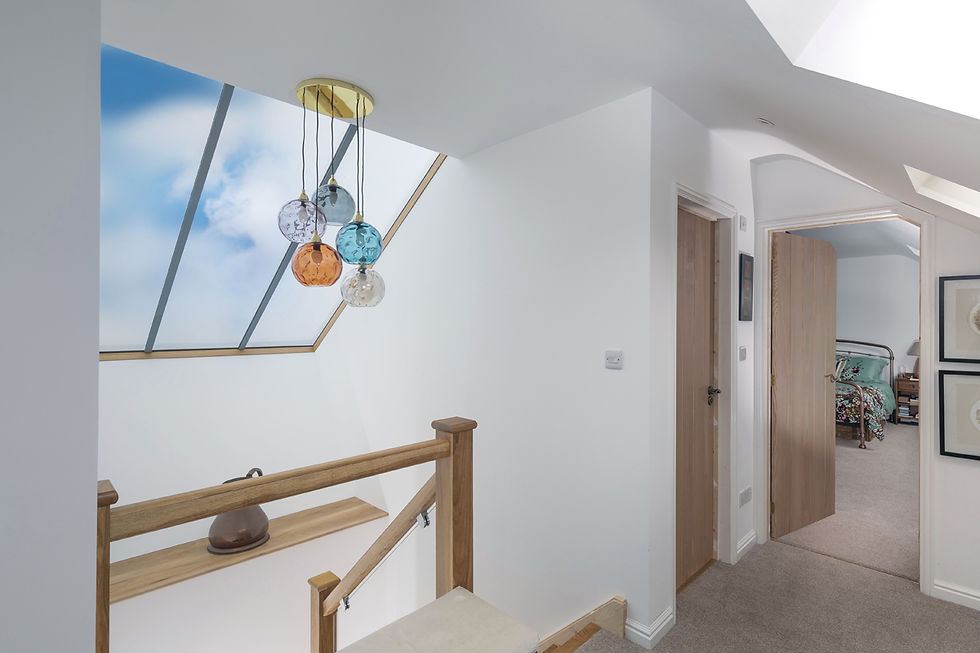
This allowed the rooflight to extend across the full width of the stairwell, creating what the client described as the illusion of “an open sky above the stairs. Coordination between the rooflight manufacturer, architect and roofing contractor was particularly important throughout the installation process to ensure the rooflights integrated cleanly within the standing seam layout.In addition to aesthetics, durability and material compatibility also played an important role within the specification.
Similar to the standing seam roof system itself, Stella’s stainless steel rooflights are designed for long-term performance and corrosion resistance, making them particularly suitable for demanding external environments.The homeowners were equally impressed with Stella’s collaborative approach throughout the project.
David Tonge said: “Their level of responsiveness, as well as their attention to detail and in-depth knowledge, continued throughout the project.” He added:“ Of all the contractors working on the project, Stella’s customer service impressed me the most.” The completed project demonstrates how carefully considered rooflight detailing can complement contemporary standing seam architecture rather than compete with it.
Externally, the rooflights sit discreetly within the roof composition, preserving the minimalist character of the roofscape. Internally, they transform the living spaces with natural daylight while maintaining excellent thermal performance. s standing seam roof systems continue to grow in popularity across both contemporary and heritage-sensitive projects, flush-fitting rooflight design is likely to become an increasingly important part of the specification process.

For architects seeking to preserve clean roof geometry and minimise visual disruption, flush-fitting rooflights offer a more considered approach to introducing daylight into contemporary roof architecture.
Project Team
Rooflight Manufacturer: Stella Rooflight
Project Location: Sheepscombe, Cotswolds
Client: David and Elaine Tonge
Architect: Geoff Luxton
Roof System: GreenCoat PLX Pro BT standing seam roof
Rooflight Type: Bespoke flush-fitting conservation rooflights
Frame Material: Marine-grade 316 stainless steel
Configuration: Bespoke design fitted between structural steel purlins
Key Design Objective: Preserve the clean geometry of the standing seam roof while maximising natural daylight
Read the case study here: https://stellarooflight.co.uk/stella-conservation-rooflight-zinc-roof/For more information on Stella bespoke conservation rooflights, please visit https://stellarooflight.co.uk or to discuss your project, telephone 01794745445 or email info@stellarooflight.co.uk